
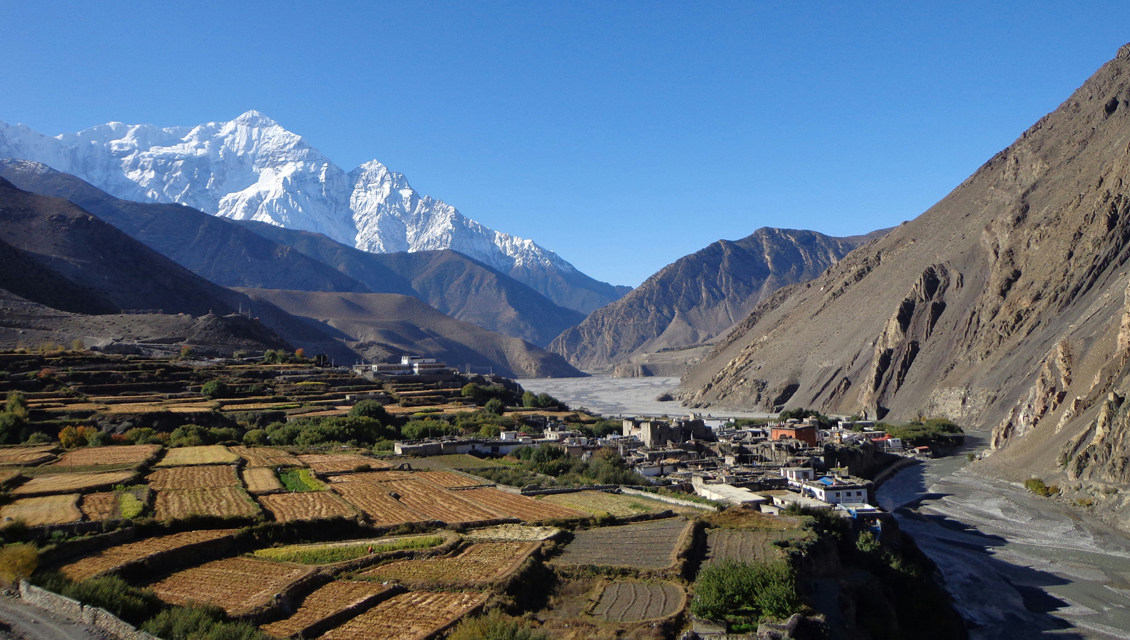
Lower Mustang is one of Nepal’s most diverse Himalayan travel destinations, combining dramatic mountain scenery, ancient villages, Buddhist and Hindu heritage, traditional Thakali culture, and the spectacular Kali Gandaki Valley.
Located in north-central Nepal, Lower Mustang is generally associated with destinations such as Jomsom, Marpha, Tukuche, Kagbeni, Muktinath, and the surrounding Kali Gandaki corridor. The region provides an accessible introduction to Mustang’s distinctive trans-Himalayan landscape without requiring the longer journey into the restricted Upper Mustang area.
For travelers looking for Himalayan culture, mountain views, pilgrimage sites, village walks, and a shorter trekking experience, a Lower Mustang Trek can be an excellent way to explore the region.
This complete Lower Mustang guide explains everything you need to know before traveling, including the best places to visit, trekking routes, altitude, weather, transportation, permits, accommodation, food, culture, safety, and suggested itineraries.
What Is Lower Mustang?
Lower Mustang is the southern and more accessible part of the Mustang region of Nepal.
The landscape changes dramatically as you travel north from the greener hills around Pokhara and Beni into the dry Himalayan valleys around Jomsom and Kagbeni. The region sits along the Kali Gandaki Valley, with the Annapurna and Dhaulagiri mountain ranges rising on either side.
Unlike the restricted Upper Mustang area, which extends north from the Kagbeni area toward Lo Manthang, Lower Mustang can be explored through a combination of road journeys, domestic flights, village walks, and trekking routes.
Important destinations in Lower Mustang include:
- Jomsom
- Marpha
- Tukuche
- Kagbeni
- Muktinath
- Lete
- Kalopani
- Tatopani
- Lupra and surrounding villages
The Nepal Tourism Board identifies Mustang as an important trans-Himalayan destination and highlights Muktinath, Kagbeni and the Kali Gandaki landscape as major attractions in the region.
Why Visit Lower Mustang?
Lower Mustang offers a combination that is difficult to find elsewhere in Nepal.
You can experience Himalayan mountains, dry landscapes, traditional villages, monasteries, pilgrimage sites, local cuisine and ancient trade routes within a relatively compact journey.
Major reasons to visit Lower Mustang include:
- Dramatic views of Annapurna and Dhaulagiri
- The spectacular Kali Gandaki Valley
- Historic villages such as Kagbeni and Marpha
- The sacred Muktinath Temple
- Traditional Thakali culture
- Tibetan-influenced architecture and Buddhist monasteries
- Apple orchards and local products around Marpha
- Scenic mountain flights to Jomsom
- Short and moderate trekking possibilities
- Road-based and customized travel options
- Access to the wider Mustang region
The Kali Gandaki corridor is particularly impressive because it separates major Himalayan massifs and forms one of the defining geographical features of the region. Nepal Tourism Board describes the Kali Gandaki gorge as the deepest gorge in the world.
Best Places to Visit in Lower Mustang
1. Jomsom
Jomsom is the administrative and transportation hub of Mustang and one of the main gateways to the region.
Situated at approximately 2,700 m, Jomsom is known for its mountain airport, strong afternoon winds, stone-and-mud architecture and views toward the surrounding Himalayan peaks.
Most travelers use Jomsom as the starting point for exploring destinations farther north or south.
From Jomsom, travelers can continue toward:
- Kagbeni
- Muktinath
- Marpha
- Tukuche
- Lete
- Tatopani
- Upper Mustang
The flight from Pokhara to Jomsom is one of Nepal’s classic mountain flight experiences, although flight operations can be affected by weather and wind conditions.
2. Marpha
Marpha is one of the most attractive traditional villages in Lower Mustang.
The village is famous for its:
- Whitewashed houses
- Stone-paved lanes
- Apple orchards
- Thakali culture
- Traditional architecture
- Mountain scenery
Marpha is an ideal place to slow down and experience village life rather than simply passing through.
The village is also an important stop on many Mustang itineraries traveling through the Kali Gandaki Valley.
3. Tukuche
Located north of Marpha, Tukuche is another historic settlement associated with the traditional trading routes through the Kali Gandaki Valley.
The village offers spectacular views and a quieter atmosphere than some of the larger stops.
Tukuche is especially interesting for travelers who want to understand Mustang’s history as a Himalayan trade corridor between the Tibetan plateau and the lower valleys of Nepal.
4. Kagbeni
Kagbeni is one of the most historically significant villages in Lower Mustang.
Located at around 2,800 m, Kagbeni sits near the confluence of the Kali Gandaki and Kag Khola rivers.
Its narrow lanes, traditional houses, Buddhist shrines, mani stones and dramatic surrounding cliffs make it one of the most memorable settlements in Mustang.
Kagbeni is also widely recognized as the traditional gateway to Upper Mustang.
The Nepal Tourism Board places Kagbeni at approximately 2,804 m and describes its location along the Kali Gandaki River and its religious and cultural significance.
For travelers considering going farther north, Kagbeni is where the character of the landscape becomes increasingly associated with the high desert environment of Upper Mustang.
5. Muktinath
Muktinath is one of the most important pilgrimage destinations in the Himalayas.
Located at roughly 3,800 m, Muktinath is sacred to both Hindus and Buddhists.
The site includes:
- Muktinath Temple
- 108 sacred water spouts
- Jwala Mai Temple
- Buddhist monasteries
- Himalayan mountain views
- Sacred natural springs and surrounding pilgrimage sites
For Hindus, Muktinath is associated with Lord Vishnu. Buddhists also consider the area highly sacred.
The Nepal Tourism Board confirms the religious significance of Muktinath to both Hindu and Buddhist communities and records the temple at approximately 3,800 m.
A Lower Mustang itinerary that includes Muktinath therefore combines trekking and Himalayan scenery with an important cultural and spiritual experience.
6. Lete and Kalopani
The southern section of the Kali Gandaki Valley becomes greener as the altitude decreases.
Lete and Kalopani are surrounded by forests, waterfalls, mountain views and dramatic valley scenery.
These villages create a striking contrast with the dry, windswept landscapes around Jomsom, Kagbeni and Muktinath.
This changing environment is one of the major attractions of traveling through Lower Mustang.
Lower Mustang Trek
The Lower Mustang Trek is generally a shorter and more accessible Himalayan trekking experience than many of Nepal’s longer high-altitude treks.
A typical route can connect:
Pokhara → Jomsom → Kagbeni → Muktinath → Marpha → Tukuche → Kalopani → Jomsom
Depending on the itinerary, travelers can also use road transportation for sections of the route.
The existing Lower Mustang itinerary on Mustang Trekking follows Jomsom, Kagbeni, Muktinath, Marpha/Tukuche, Kalopani and Jomsom, with flights between Pokhara and Jomsom.
Recommended internal link:
Lower Mustang Trek – Complete Itinerary
Lower Mustang Trek Itinerary
A classic Lower Mustang itinerary can be completed in approximately 7–11 days, depending on transportation, acclimatization, trekking pace and the number of villages included.
Day 1: Kathmandu to Pokhara
Travel from Kathmandu to Pokhara and prepare for the journey into the Mustang region.
Day 2: Pokhara to Jomsom and Trek to Kagbeni
Take an early morning flight from Pokhara to Jomsom. After arrival, begin the trek toward Kagbeni through the scenic Kali Gandaki Valley.
Day 3: Kagbeni to Muktinath
Trek from Kagbeni to the sacred pilgrimage destination of Muktinath, located at approximately 3,800 m. Explore Muktinath Temple, the 108 sacred water spouts and surrounding Buddhist and Hindu religious sites.
Day 4: Muktinath to Marpha
Descend through the dramatic Kali Gandaki Valley toward Marpha. Explore the traditional village, stone-paved lanes, monasteries and surrounding apple orchards.
Day 5: Marpha to Tukuche
Continue south through the Kali Gandaki Valley to Tukuche, a historic Thakali settlement and former trading center between the Nepalese hills and Tibet.
Day 6: Tukuche to Kalopani
Trek from Tukuche toward Kalopani, enjoying changing landscapes as the dry Mustang terrain gradually gives way to greener forests and mountain valleys.
Day 7: Kalopani to Tatopani
Descend from Kalopani through the lower Kali Gandaki Valley to Tatopani. Relax at the natural hot springs and enjoy the warmer climate and lush surroundings.
Day 8: Tatopani to Pokhara
Drive from Tatopani to Pokhara, following the scenic Kali Gandaki corridor and connecting roads through the lower Himalayan foothills. Upon arrival, enjoy the evening around Lakeside Pokhara.
Day 9: Pokhara to Kathmandu
Travel from Pokhara to Kathmandu by tourist bus or private vehicle, concluding the Lower Mustang journey.
Lower Mustang Altitude
Altitude is an important consideration when planning a Lower Mustang trip.
Approximate elevations include:
| Destination | Approx. Elevation |
|---|---|
| Pokhara | 800–900 m |
| Tatopani | 1,200 m |
| Jomsom | 2,700 m |
| Kagbeni | 2,800 m |
| Marpha | 2,650–2,700 m |
| Tukuche | 2,590 m |
| Muktinath | Around 3,800 m |
Elevations can vary slightly between sources and specific points within each settlement.
Muktinath is the highest major destination on many classic Lower Mustang itineraries and sits at approximately 3,800 m according to the Nepal Tourism Board.
Because the route reaches high altitude relatively quickly, travelers should walk at a comfortable pace, stay hydrated and allow time for acclimatization.
Lower Mustang Weather
Lower Mustang has a distinctive Himalayan climate because the region lies within the rain-shadow area north of the main Himalayan ranges.
The weather is generally drier than many trekking areas farther south.
Spring: March to May
Spring brings increasingly stable weather and warmer daytime conditions.
It is a popular period for trekking, photography and village exploration.
Summer/Monsoon: June to August
Mustang receives less monsoon rainfall than many parts of Nepal, making it one of the country’s relatively dry Himalayan destinations during the monsoon.
However, road and flight conditions can still be affected by rain, landslides and changing mountain weather, particularly on the approaches from Pokhara and lower valleys.
Autumn: September to November
Autumn generally provides good visibility and comfortable trekking conditions.
Mountain views are often excellent after the monsoon.
Winter: December to February
Winter brings cold temperatures, especially at higher elevations.
Snow, freezing temperatures and reduced services can affect travel plans.
For most travelers, spring and autumn are the easiest seasons for planning a Lower Mustang Trek, although the best season depends on the type of experience you want.
Best Time to Visit Lower Mustang
The best time to visit Lower Mustang depends on whether your priority is trekking, photography, cultural exploration or avoiding busy periods.
For trekking and sightseeing, spring and autumn are generally the most popular periods.
Recommended months
March to May
Good for trekking, village exploration and mountain scenery.
September to November
Generally favorable visibility and comfortable conditions.
June to August
Mustang’s rain-shadow location makes it more accessible than many Himalayan destinations during monsoon, but road and flight conditions should still be checked.
December to February
Suitable for experienced travelers prepared for cold weather, but some services and routes may be more limited.
How to Get to Lower Mustang
The most common starting point for Lower Mustang is Pokhara.
There are two main ways to reach the region.
Option 1: Fly to Jomsom
The classic route is:
Kathmandu → Pokhara → Jomsom
Jomsom Airport provides access to the central Mustang region.
Flights are typically operated in the morning because mountain winds can become stronger later in the day. However, flight schedules are weather-dependent.
The Nepal Tourism Board confirms regular flights connecting Jomsom and Pokhara.
Option 2: Travel by Road
Travelers can also reach Mustang by road via the Kali Gandaki Valley.
A road journey allows you to experience destinations such as:
Pokhara → Beni → Tatopani → Ghasa → Marpha → Jomsom
Road conditions vary by season, and travel times can change because of weather, road construction and landslides.
Lower Mustang vs Upper Mustang
One of the most common questions travelers ask is:
What is the difference between Lower Mustang and Upper Mustang?
The two areas are geographically connected but provide different travel experiences.
| Lower Mustang | Upper Mustang |
|---|---|
| More accessible | More remote |
| Jomsom, Marpha, Kagbeni, Muktinath | Lo Manthang, Ghami, Tsarang, Chhusang |
| Strong Thakali influence in many communities | Strong Tibetan cultural influence |
| Road and air access | Mostly road/trekking access |
| Shorter itineraries possible | Usually longer itineraries |
| Muktinath pilgrimage route | Ancient Kingdom of Lo landscapes |
| Generally easier to combine with Pokhara | Requires more planning |
| No Upper Mustang Restricted Area Permit for the Lower Mustang portion | Restricted Area Permit required |
The key permit distinction is important: Nepal’s Department of Immigration specifically identifies Upper Mustang as a restricted area and publishes a separate Restricted Area Permit fee for it.
For current permit and trekking requirements, travelers should confirm the rules before departure because regulations can change.
Related guide:
Complete Upper Mustang Trek Guide
Do You Need a Permit for Lower Mustang?
Lower Mustang should not be confused with the Upper Mustang Restricted Area.
The Nepal Department of Immigration specifically lists Upper Mustang as a restricted trekking area with its own permit requirement.
For Lower Mustang, travelers may still need applicable conservation-area, trekking-registration or other permits depending on the current route and travel arrangement.
Requirements can change, so it is important to verify the latest regulations before your trip.
If you book through a registered trekking agency, the agency can normally help organize the required permits and documentation.
The Nepal Tourism Board also advises trekkers to check whether their selected route requires a guide and TIMS card and to use a government-registered trekking agency where applicable.
Lower Mustang Culture and Heritage
Culture is one of the strongest reasons to visit Lower Mustang.
The region has historically been influenced by trade between the Nepalese hills and the Tibetan plateau.
In the southern parts of Mustang, Thakali communities are particularly associated with settlements such as Marpha and Tukuche.
Further north, Tibetan Buddhist cultural influences become increasingly prominent.
Travelers can see:
- Buddhist monasteries
- Chortens
- Mani walls
- Prayer flags
- Traditional stone-and-mud houses
- Local festivals
- Ancient trading settlements
- Hindu pilgrimage traditions
- Traditional Himalayan cuisine
Muktinath is particularly significant because Hindu and Buddhist traditions coexist at this sacred Himalayan site.
Food in Lower Mustang
Food is an important part of the Lower Mustang experience.
Typical meals available along trekking routes include:
- Dal bhat
- Thukpa
- Tibetan bread
- Momos
- Noodles
- Fried rice
- Soups
- Potatoes
- Local vegetables
- Buckwheat-based dishes
- Thakali cuisine
Marpha is also known for its apple-growing tradition, making apple-based local products part of the village’s identity.
Travelers should expect a mixture of traditional Nepali, Tibetan-influenced and tourist-friendly lodge food.
Accommodation in Lower Mustang
Accommodation varies depending on the destination.
Jomsom, Marpha and Muktinath offer a wider range of hotels and lodges, while smaller villages generally have simpler guesthouses and teahouses.
Expect:
- Local guesthouses
- Teahouses
- Mountain lodges
- Family-run accommodation
- Hotels in larger settlements
Facilities become simpler as you travel toward more remote areas.
A trekking package normally arranges accommodation in advance, which can be useful during busy trekking seasons.
Is Lower Mustang Difficult to Trek?
The difficulty of a Lower Mustang Trek depends on the route.
A route focused on Jomsom, Marpha and surrounding villages can be relatively manageable, while reaching Muktinath involves hiking at around 3,800 m.
The main challenges are:
- Altitude
- Dry air
- Strong winds
- Long walking days
- Uneven trails
- Dust on road sections
- Rapid weather changes
You do not need to be an elite mountaineer to visit Lower Mustang, but reasonable cardiovascular fitness and preparation will make the experience more comfortable.
Lower Mustang Trek Packing List
A practical Lower Mustang packing list should include:
Clothing
- Lightweight trekking trousers
- Thermal base layers
- Fleece jacket
- Down or insulated jacket
- Windproof jacket
- Warm hat
- Gloves
- Comfortable trekking socks
Footwear
- Broken-in trekking shoes or boots
- Comfortable camp shoes
- Extra socks
Sun protection
- Sunglasses
- Sunscreen
- Lip balm with SPF
- Sun hat
Trekking equipment
- Daypack
- Water bottles
- Trekking poles
- Headlamp
- Power bank
- Personal first-aid kit
Documents
- Passport
- Copies of important documents
- Travel insurance
- Required permits
Because Mustang can be dry and windy, sun protection and hydration should be treated as essential rather than optional.
Lower Mustang Travel Tips
1. Start early
Mountain winds can become stronger later in the day, particularly around the Kali Gandaki Valley.
Early starts are useful for both trekking and flights.
2. Drink enough water
The dry climate can make dehydration easier to overlook.
Carry water and drink regularly.
3. Prepare for changing temperatures
Lower elevations may feel warm during the day while Muktinath and other high areas can be very cold.
Layering works best.
4. Allow flexibility for flights
Do not schedule an international flight immediately after a domestic mountain flight.
Weather can cause delays or cancellations.
5. Respect local culture
Ask permission before photographing people, religious ceremonies or monastery interiors.
Dress respectfully at religious sites.
6. Travel responsibly
Avoid single-use plastics where possible, carry waste with you and support locally owned accommodation, restaurants and services.
Is Lower Mustang Worth Visiting?
Lower Mustang offers a different Himalayan experience from the classic green trekking routes of Nepal.
Instead of dense forests dominating the landscape, travelers encounter:
dry cliffs → deep river valleys → traditional villages → monasteries → snow-covered mountains → sacred pilgrimage sites
The journey also allows travelers to experience several different cultural and ecological environments in a relatively short trip.
For travelers who want to experience Mustang without committing to a long Upper Mustang expedition, Lower Mustang provides a practical introduction to the region’s landscapes and heritage.
How Many Days Do You Need for Lower Mustang?
A short Lower Mustang trip can be completed in approximately 5–7 days, while a more relaxed trekking itinerary can take 8–11 days or longer.
5–7 days
Suitable for travelers focusing on:
- Jomsom
- Kagbeni
- Muktinath
- Marpha
8–11 days
Better for travelers wanting:
- More trekking
- Tukuche
- Kalopani
- Additional village exploration
- Acclimatization
- More time for photography and cultural experiences
10+ days
Suitable for travelers combining Lower Mustang with:
- Pokhara
- Annapurna routes
- Upper Mustang
- Muktinath pilgrimage
- Other Mustang experiences
Lower Mustang Trek with Mustang Trekking
Travelers looking for a professionally organized Lower Mustang Trek can explore the dedicated itinerary from Mustang Trekking.
The company’s current Lower Mustang route includes Jomsom, Kagbeni, Muktinath, Marpha/Tukuche and Kalopani, with transportation and trekking arrangements designed around the Kali Gandaki Valley.
Explore the Lower Mustang Trek
Travelers interested in exploring beyond Lower Mustang can also consider the Upper Mustang Trek, which continues north from the Kagbeni area toward the historic settlements of the former Kingdom of Lo.
Explore the Upper Mustang Trek
For a broader understanding of the region, see the Mustang Information Guide:
Mustang Information – Complete Regional Guide
Frequently Asked Questions About Lower Mustang
Where is Lower Mustang?
Lower Mustang is located in north-central Nepal along the Kali Gandaki Valley. Major destinations include Jomsom, Marpha, Tukuche, Kagbeni and Muktinath.
What is Lower Mustang famous for?
Lower Mustang is famous for the Kali Gandaki Valley, Jomsom, Marpha, Kagbeni, Muktinath, traditional Thakali culture, Buddhist heritage and spectacular Himalayan landscapes.
What is the altitude of Lower Mustang?
Altitude varies significantly. Jomsom is around 2,700 m, Kagbeni around 2,800 m and Muktinath around 3,800 m.
Is Lower Mustang the same as Upper Mustang?
No. Lower and Upper Mustang are different travel areas. Upper Mustang is a restricted area requiring a special permit, while Lower Mustang is the more accessible southern section of the region.
Is Lower Mustang suitable for beginners?
Many Lower Mustang itineraries are suitable for travelers with reasonable fitness, although altitude becomes an important consideration around Muktinath.
Can you visit Lower Mustang by road?
Yes. Road access extends into the Kali Gandaki Valley and connects major destinations in Mustang. Road conditions and travel times can vary depending on weather and seasonal conditions.
Can you fly to Lower Mustang?
Yes. Jomsom Airport is the principal air gateway for central Lower Mustang, with flights connecting Jomsom and Pokhara subject to weather and operational conditions.
How many days do I need for a Lower Mustang Trek?
A short trip can take around 5–7 days, while a more comprehensive Lower Mustang itinerary may take 8–11 days or more.
What is the best time for Lower Mustang Trek?
Spring and autumn are generally popular seasons for trekking, particularly March–May and September–November. Mustang’s rain-shadow location also makes it an option during the monsoon, although road and flight conditions should still be checked.
Do I need a guide for Lower Mustang?
Guide and TIMS requirements depend on the current route and regulations. Nepal Tourism Board advises trekkers to verify whether their selected route requires a guide and TIMS and to use a registered trekking agency where applicable.
Is Muktinath in Lower Mustang?
Muktinath is in Mustang and is one of the principal destinations included in classic Lower Mustang travel routes. It is located at approximately 3,800 m and is sacred to both Hindus and Buddhists.
What is the difference between Lower Mustang and Upper Mustang Trek?
Lower Mustang focuses on destinations such as Jomsom, Marpha, Kagbeni and Muktinath, while Upper Mustang continues north into the restricted region toward Lo Manthang and other historic settlements.
Final Thoughts
Lower Mustang is more than a gateway to Upper Mustang.
It is a destination in its own right, offering a remarkable combination of Himalayan scenery, ancient villages, religious heritage, local culture and dramatic trans-Himalayan landscapes.
From the mountain airport of Jomsom and the stone lanes of Marpha to historic Kagbeni and sacred Muktinath, a Lower Mustang journey provides an opportunity to experience several sides of Nepal within one spectacular Himalayan corridor.
Whether you are planning a short Lower Mustang Trek, a Muktinath pilgrimage, a village-focused cultural journey or a longer adventure continuing toward Upper Mustang, careful preparation and a flexible itinerary will help you make the most of the region.
Start planning your Lower Mustang adventure and explore the Kali Gandaki Valley, Jomsom, Marpha, Kagbeni and Muktinath with a properly planned itinerary.