
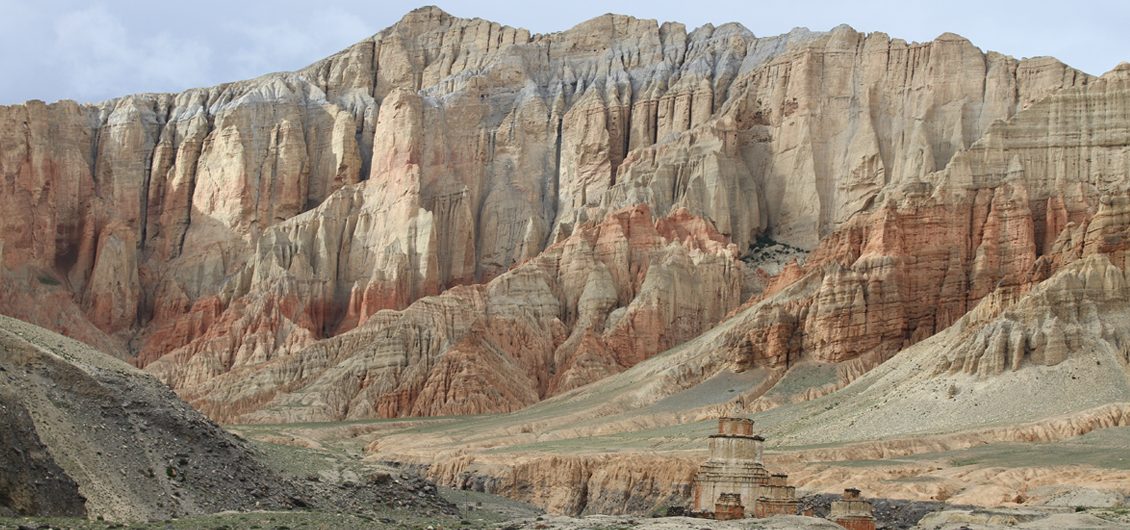
The Upper Mustang trek, also known as Nepal’s last forbidden kingdom, is one of the best trekking destinations in the world. Nestled behind the Annapurna and the Dhaulagiri, there exists this very ancient Tibetan Buddhist kingdom, which was closed to all foreign visitors until 1992 and still requires special restricted area permits to enter today.
But trekkers have very good news for 2026. In March 2026, the Nepalese government officially changed the permit system for visiting Upper Mustang. The old flat rate of USD 500 for 10 days has now changed to a flexible USD 50 per person, per day. This has significantly reduced the cost of shorter trips. Additionally, there is also no longer a two-person minimum required for groups; therefore, solo trekkers may also now visit the restricted area as long as they have a licensed guide.
This guide has everything a person needs to plan a trek to Upper Mustang in 2026 or 2027: updated permit costs, a realistic day-by-day itinerary, seasonal information, including the Tiji Festival dates, a complete budget breakdown, and several tricks and tips of the trails.
Upper Mustang Trek Overview & Details
|
Detail |
Information |
|
Maximum Elevation |
4,320m (Chogo La, eastern return) |
|
Lo Manthang Elevation |
3,840m |
|
Typical Duration |
10-14 days |
|
RAP Permit Cost (2026) |
USD 50 Per Person/Day |
|
ACAP Permit |
USD 30 (Rs. 3000) |
|
Solo Trekking |
Now allowed as of March 2026 |
|
Minimum Group Size |
Requirement Lifted as of March 2026 |
|
Licensed Guide |
Mandatory bylaws at all times |
|
Best Seasons |
Mar-May, Jun-Aug , Sep-Nov |
|
TIji Festival 2026 |
May 13-15, Lo Manthang |
|
Jomsom Flight From Pokhara |
25 mins, USD 110-115 one-way |
|
Last ATM On Route |
Jomsom-carry cash from Pokhara |
Highlights of Upper Mustang Trek
Nepal has many amazing trekking routes, but the Upper Mustang trek is special for a few unique reasons:
- Ancient Tibetan Culture
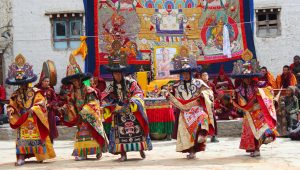
Upper Mustang was closed to the outside world for a very long time. Because of this, old traditions like thangka paintings, dances, and royal culture are still preserved very well.
- Lo Manthang – a real walled city
Lo Manthang is an ancient town where about 1,000 people still live. It has a royal palace, monasteries, and old streets. They are not constructed for tourism; it’s real life.
- You can even trek in the monsoon.
Unlike other places in Nepal, like the Annapurna Circuit trek or the Everest Base Camp trek, where rain makes the trail very difficult, the Upper Mustang trek doesn’t get much rain. So even from June to August, which is the rainy season, the Upper Mustang trek is still possible.
- The Chhosar Sky caves
Thousands of man-made caves carved into vertical cliffs across the valley, some 2,000-3,000 years old. Nobody fully knows why they are made, which makes them very interesting.
- Kaligandaki Gorge
This area has one of the deepest gorges in the world. It is mostly famous for special fossils called Shaligrams, which are sacred in Hinduism and Buddhism.
Upper Mustang Trek Permits 2026/27: Updated
Restricted Area Permit (RAP)
To trek in Upper Mustang, you need a special Restricted Area Permit, which costs USD 50 per person per day under the 2026 rules. The cost starts as soon as you cross the Kagbeni checkpoint until you exit the restricted area. Therefore, a 10-day trek costs USD 500, a 7-day trek costs USD 350, and a 5-day trek costs USD 250. This method is more flexible, as you only pay for what you use, but you cannot obtain this permit independently or at the beginning of the trek. Instead, you must go through a registered Nepali trekking agency.
The agency submits your passport and visa, the itinerary, and some other information to the Department of Immigration Nepal. The permit usually takes 1-2 working days to be processed; however, please note that processing times will usually take longer during busy times, e.g., April, May, etc. It is also important to bring printed copies of your permit to show when arriving in Kagbeni or in specific villages along your route.
Annapurna Conservation Area Permit (ACAP)
You will need an ACAP (Annapurna Conservation Area Permit) as well as a Restricted Area Permit to visit Upper Mustang because it is in the Annapurna Conservation Area. The ACAP will cost you approximately USD 30 (or roughly NPR 3,000) if you’re from outside of Nepal. If you’re from India (or another SAARC country), the cost of the ACAP will be about USD 8. The ACAP is issued by the Nepal Tourism Board, and the funds raised by the ACAP will go towards habitat conservation and development projects in the Annapurna region.
Drone and Filming Permits
In Upper Mustang, any type of commercial filmmaking, documentary filming, or use of a drone will require prior permission through your trekking agency from the appropriate government authority to obtain the necessary permits. Through your trekking permits, the use of a drone is not permitted, as this is not an accepted form of personal and/or recreational use of a drone, even in Upper Mustang. If someone violates these requirements, they may face a number of penalties as a result; therefore, it is very important to comply with the regulations.
Upper Mustang Trek Permit Cost 2026
|
Permit/Requirement |
2026 Cost |
|
Restricted Area Permit (RAP) |
USD 50 Per person per day |
|
ACAP Permit |
USD 30 per person |
|
TIMS Card (if applicable) |
USD 10-20 |
|
Licensed Guide |
USD 25-40 per day |
|
Porter |
USD 15-25 per day |
|
10-day permit total (RAP + ACAP) |
USD 530 per person |
|
7-day permit total (RAP+ACAP) |
USD 380 per person |
Upper Mustang Trek Cost 2026
When you’re going to do an Upper Mustang trek, the permits will be your biggest fixed expense. For those on a budget who share rooms with someone and eat basic meals like dal baht, they can expect to spend about $60 – $80 a day for their daily expenditures (not including permits) during a 12-day trip from Kathmandu. That works out to approximately $1,800 – $2,200 total for the trip. Mid-range trekkers who prefer to stay in private rooms and use jeeps for transport should expect to spend approximately $2,500 – $3,500 for a similar length of time. Fully arranged tours that have private transportation (like vehicles) and lodgings at better tea houses cost between $4,000 and $6,000+ for an Upper Mustang adventure.
A key point to remember with respect to your trip is cash—there are no ATMs after Jomsom, so please take the time to withdraw the amount of Nepali rupees you will need prior to departing from either Kathmandu or Pokhara. An additional example of budgeting is that you should also plan to spend an additional NPR 2,000 – NPR 3,000 per day on things such as hot showers, internet access, donations for the monasteries, and extra snacks, as credit cards aren’t accepted in Upper Mustang.
Upper Mustang Trek Itinerary 2026
Day 1: Kathmandu to Pokhara
Take a short flight, about 30 minutes, from Kathmandu to Pokhara. After arriving in Pokhara, you can relax and explore the lakeside view and prepare for the early flight the next morning.
Day 2: Pokhara to Jomson (2720m)
Get an early morning (approx. 25 min) flight to Jomsom from Pokhara – flights typically are available only before 10:00 AM because there are strong winds later during the day. Spend the rest of the day in Jomsom resting and acclimating to the altitude.
Day 3: Jomsom to Kagbeni (2,810m)
To get from Jomsom to Kagbeni, it’s a two-hour walk or a 30-minute drive by jeep. As you’re entering a restricted area, the last village before doing so would be Kagbeni, where your guide will collect your permits on your behalf at the checkpoint. After collecting your permits, you will be able to explore Kagbeni’s narrow streets that date back to the Middle Ages, visit the Kag Chode Monastery (which is over 700 years old), and take in the surrounding scenery.
Day 4: Kagbeni to Chele (3,050m)
This trek leads up through the ochre canyon landscape of Upper Mustang. Leave at 7:00 AM to avoid the high winds in the afternoon; the Kali Gandaki is one of the windiest areas in all of Nepal. The distance is around 17 kilometers.
Day 5: Chele to Syangboche (3,800m)
The trek is difficult yet rewarding due to its location; take your time and enjoy the view over the two high passes, Taklam La (3,624m) and Dajori La (3,735m). Expect to take 6-7 hrs to complete this trek; therefore, begin the day well-rested and with your body prepared to go at a comfortable level.
Day 6: Syangboche to Ghami (3,520m)
Take a moment to experience the longest mani wall in Nepal at Ghami Village. The mani wall is a continuous line of stones that have been inscribed with the Buddhist mantra “Om Mani Padme Hum.” The main wall is several hundred meters long and has deep spiritual significance to the local people. As you walk past the mani wall and chortens, make sure to walk around them in a clockwise direction, as it is customary to do so as a way of honoring the Buddhist faith and receiving blessings.
Day 7: Ghami to Tsarang (Charang, 3,560m)
Located in Mustang, the Tsarang Monastery is a grand 4-story structure that serves as one of the principal religious sites in this area of Tibet. It contains many of the oldest paintings illustrating ancient Buddhist tales through their use of artistic design. Visitors may investigate any of the lower floors with free-range access; however, if you wish to view the upper floors, you must directly ask the caretaking lama for access. Normally, respectful visitors will have no problems acquiring access to the upper levels.
Day 8: Tsharang to Lo Manthang (3,840m)
When you finally reach the flat tops of Lo Manthang after an extensive amount of time walking on very flat ground, there is an element of excitement in seeing the end of your journey. The Royal Palace and the Thubchen Gompa are located in the city; they both have extensive works of art from the 15th century that are in the process of being restored so that they can be preserved.
Day 9: Rest Day
It is a rest day, but you can go to some nearby sites: the Chhosar Sky Caves are close to the north of your camp, about 2 hours away, or visit Namgyal Gompa, which is located on a ridge (above the town). If you’re at this location during May 13–15, 2026 you will be able to see the famous cultural tradition of the Tiji Festival for 3 days, which will include colorful mask-wearing Cham dances in the main square, which is considered one of the top three celebrated annual cultural events in the entire Himalayan region.
Day 10: Lo Manthang to Drakmar/Ghiling
You will return to Lo Manthang, where you will visit villages such as Drakmar and Ghiling as part of your journey back. You will also see some beautiful scenery along the way, especially the red cliffs at Drakmar.
Day 11: Ghiling to Jomsom
You will continue your journey towards Muktinath, which is an important temple complex for Hindus and Buddhists, before going down to Jomsom. This eastern route is more rewarding than retracing your steps because there are more cultural and natural highlights than when taking the western route back through the same area.
Day 12: Jomsom To Pokhara
At dawn, you will catch a plane from Jomsom to Pokhara. Most trekkers who complete the trek then typically rest in Pokhara for a night before heading back to Kathmandu the following day.
Day 13: Pokhara to Kathmandu
From Pokhara, you travel back to Kathmandu, leaving the Fishtail and the Annapurna. Have a sleep on your journey to Kathmandu, as you will want to join us for a trek-end dinner tonight. Before that, you can explore Thamel, have some coffee, and also get a massage or spa treatment for your body.
Best Time to visit Upper Mustang
March to May (Spring)
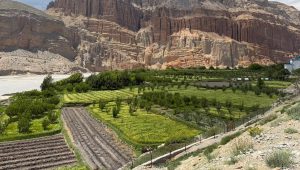
Moderate temperatures, clear skies; mustard fields in bloom; as well as the Tiji festival (May 13-15, 2026) are what make this season the best. Winds are at their strongest during the months of April, so get up early to begin your day. If you wish to have accommodation in Lo Manthang during the week of the festival, you will need to book 2-3 months in advance.
June to August (Monsoon)
The rain shadow effect keeps the weather drier in Upper Mustang compared to other areas of Nepal during the monsoon season and offers trekkers less crowded areas that are also much cheaper than they would normally find in other parts of the country. The major road into Jomsom may sometimes become blocked due to landslides; therefore, any time you can fly there as an option, you should consider this as a backup option.
September to November (Autumn)
The sky becomes clearer following the rains, providing spectacular vistas of some stunning mountains, including those in the Himalayas, Dhaulagiri, and Nilgiri. In November, as fall begins, temperatures drop rapidly, and locations above 3,500 meters can experience subzero temperatures. As the trekking season is popular, make sure to get permits, book your flight, and reserve accommodation in advance (6-8 weeks earlier) so you are prepared for the busy times of the year.
December to February (Winter)
Despite the freezing temperatures and howling winds, trekking can still be done as the main route stays below 4000 meters in elevation. Many teahouses close during the winter months of January, when the weather is particularly severe, making this not only the cheapest time to visit Upper Mustang but also the quietest time.
Practical Tips for Upper Mustang Trek
- Acclimatization: It is recommended that you take the time to acclimatize to altitude. For this reason, you should spend at least one night each in Jomsom (2,720m) and Kagbeni (2,810m) before advancing further up the mountain. You should drink 3–4 litres of water daily for proper acclimatization. Diamox is a preventative measure, but it should be taken in consultation with a physician.
- Cash: If you need cash after leaving Jomsom, there are no ATMs available until you return to Jomsom. Plan on an additional expense of around NPR 2,000-3,000 per day for personal items while trekking. Credit cards are not accepted in most locations.
- Water & Food: Treat all tap water using purification tablets or a UV purification filter before using it as drinking water. Do not rely on bottled water. Foods provided in local guest houses (teahouses), such as dal bhat, thukpa, and tsampa porridge, are simple but will satisfy your hunger.
- Navigation: While you should always be prepared to use your phone as an emergency backup, it is advisable to download offline maps or use others like Maps.me or Gaia GPS as a backup while hiking in areas where there may be no cell signal. In addition, it is also a good idea to have a printed copy of the area or use a paper map for navigational backup.
- Trekking Responsibly: Ask for permission before taking pictures of people or monasteries. It is best to walk clockwise around the Mani walls and chortens. Do not purchase any type of antique or old religious merchandise; this is against the law and damages local culture.
Is Upper Mustang worth it in 2026?
The cost of the Upper Mustang trek is not low, but it pays off provided that you plan properly for your trip. This area is different than the other trekking areas in Nepal because it has unpopulated trails, has an untouched Tibetan-influenced culture, and has rugged mountainous desert-like terrain.
After the 2026 updates for trekking permits were changed, people have continued to experience a little more flexibility in terms of traveling to and from Upper Mustang, and they were also given some newly added options for being able to travel independently; however, costs are still extremely high, and therefore, budgeting is essential for this area. When making your plans to go to Upper Mustang, we highly recommend utilizing an experienced guide, making sure you have sufficient funds for your trip (these can be found at an ATM or bank in Pokhara or Kathmandu, but there are no reliably functioning banks within the borders of Upper Mustang).
You should also plan on being able to spend a minimum of 13 days in the area to get a true sense of the region and its beauty. Upper Mustang can provide one of the most incredible trekking experiences in Nepal when your trip is planned out properly, which includes all of these elements.
Book Upper Mustang Trek with Mustang Trekking!
