
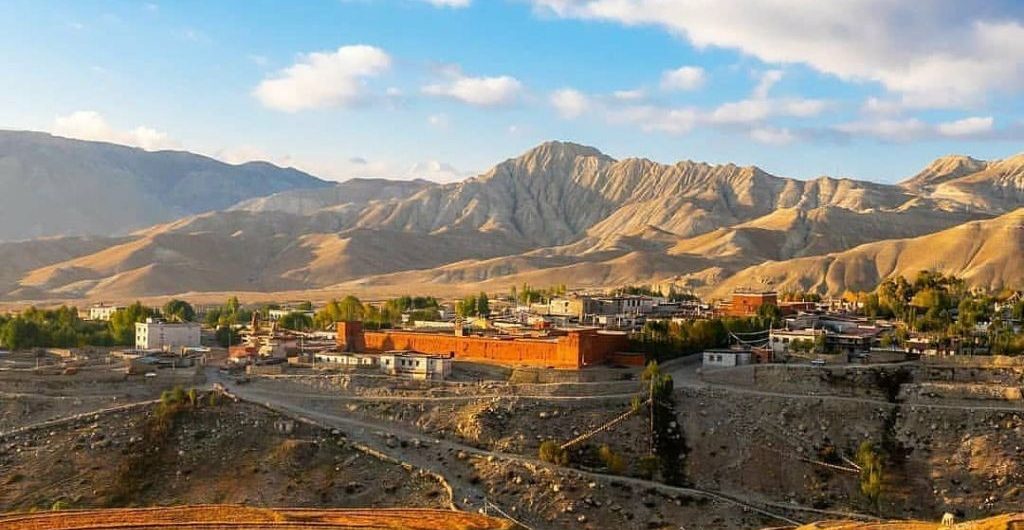
Lho Manthang: The Hidden Walled Kingdom of the Himalayas
Tucked away in the remote Upper Mustang region of Nepal, Lo Manthang also called Lho manthang is a historic walled city that once served as the capital of the ancient Kingdom of Lo. Established around 1380 AD by King Ame Pal, this fortress town remains one of Nepal’s best-preserved examples of Tibetan culture and medieval Himalayan architecture.
Geography and Climate
Located at an elevation of about 3,800 meters (12,460 feet) near the Tibetan border, Lho Manthang sits north of the Annapurna and Dhaulagiri ranges in a high-altitude desert.
- Coordinates: 28°33′–29°19′ N, 83°28′–84°15′ E
- Temperature: max 23°C / min -2°C
- Annual rainfall: roughly 300 mm
The region lies in the rain shadow of the Himalayas, giving it an arid, wind-swept landscape of golden cliffs, canyons, and eroded rock formations .
History and Heritage
Lho Manthang was once an independent Buddhist kingdom strategically placed along the ancient Salt Route linking Tibet and India. Even after the region’s annexation by Nepal in the 18th century, Lo’s monarchs retained semi-autonomous powers until Nepal abolished its monarchy in 2008. The last king, Jigme Dorje Palbar Bista, symbolized this enduring lineage.
The city’s 856-meter-long wall, compacted using mud and yak labor, encircles labyrinthine alleys, whitewashed houses, and monasteries that date back over six centuries. The name Lho-Man-Thang translates to “Land of the Heart’s Desire.”
Cultural Life and Religion
Lho Manthang remains a bastion of Tibetan Buddhism and Bon traditions, preserved through centuries of isolation. The people, known as the Loba, speak a Tibetan dialect and honor intricate belief systems blending astrology, omens, and ancient rituals.
Major monasteries include:
- Jampa Lhakhang (God House), famed for its 15th-century mural paintings and a towering Maitreya Buddha statue
- Thupchen Monastery, a vast prayer hall adorned with mythological murals
- Namgyal Gompa, the “Monastery of Victory,” perched on a hilltop
- Chhode Monastery, still home to practicing monks today
Festivals
Three major festivals punctuate Lho Manthang’s calendar:
- Tiji Festival (May): A three-day masked dance symbolizing the victory of good over evil, honoring Dorje Jono who defeated a demon causing drought.
- Yartung Festival (August): A horse-racing celebration marking the end of summer and harvest readiness.
- Losar (February) and Sonampa (January): Tibetan New Year festivities with prayer flags, feasts, and communal gatherings.
Mysterious Caves and Ancient Art
High above Lo’s valleys, hundreds of cliffside sky caves have been discovered—some dating to the 13th century. These contain murals, manuscripts in gold and silver ink, pottery shards, and Buddhist scriptures, providing clues to the region’s pre-Buddhist and early trade-era civilizations.
Travel and Access
Visitors reach Lho Manthang via Pokhara–Jomsom (158 km) by flight, bus, or jeep, and then a trek or rough jeep ride northwards. Because Upper Mustang is classified as a restricted region, foreign travelers must obtain a special permit.
Accommodations now range from traditional home stays to small eco-resorts, maintaining the area’s sustainable tourism ethos.
Why Visit Lho Manthang?
- Experience a living Tibetan culture within Nepal
- Explore ancient monasteries and royal palaces
- Witness the dramatic trans-Himalayan desert landscapes
- Discover archaeological treasures in the sky caves
- Immerse in centuries-old festivals and rituals
Lho Manthang remains a remarkable crossroads of history, spirituality, and wilderness—a living museum of Himalayan civilization still thriving above the clouds.
